5/6/2018
In our final week of marketing, we used several concepts that were taught and discussed throughout the semester and applied it to the marketing simulation. Main concepts that were applied to to the simulation were: Push Strategy, Product Life Cycle, and the 4P's.
Push Strategy:
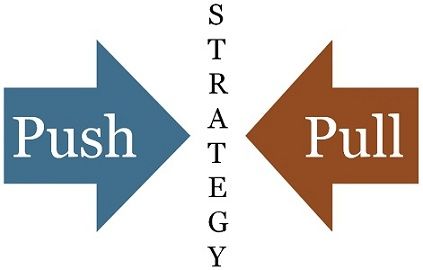
Refers to the idea of pushing one's product to the public through distribution channels
Taking the offering to the customer:
Product Life Cycle:
The PLC is a model that attempts to display the four stages a product will go through.
The four stages are Introduction, Growth, Maturity, and Decline.
Introduction stage occurs when the product first enters the market.
In the Growth stage, the investments made previously begin to pay off.
The Maturity stage has the highest level of profitability because the customers now are primarily repeat customers.
Lastly, the Decline Stage is where companies are forced to make decisions about the products future.
4P's:
Price: We applied the push strategy through periods 1 & 2 which decreased price to be only slightly higher than market average. Then beginning in period 3, we began to increase price by 5 cents a period in order to keep up with market prices and unit costs.
Promotion: We sought to greatly increase both our advertisement and promotion expenses in order to increase brand awareness. We managed to increase our awareness from 69.4% to about 76%. Additionally as part of the Push strategy, our point of purchase expenses were increased dramatically as well as modifying our ad message to display primarily benefits and primary.
Place: Early on in our planning process for the simulation our team realized that mass merchandiser sector was the fastest growing and would continue to grow greatly. Realizing this, we sought to target this distribution channel in order to dominate shelf space. Mass merchandiser would eventually overtake drug stores for sales revenue and with the largest shelf space in this channel, we saw tremendous results at the end of the simulation.
Product: We sought to not reformulate the product to eliminate alcohol. Additionally, we did not feel that introducing a new product would be best given our limited time frame for the simulation. This is further discussed in the PLC section of this blog post.
Push Strategy:
Refers to the idea of pushing one's product to the public through distribution channels
Taking the offering to the customer:
- Trade Shows
- Personal selling
- direct selling
- Package design
- Point of Sale
- Increase demand through distribution
- Provide sales incentives to intermediary
- Added incentive for customer to buy
- Seasonal
- Novelty
- Price discount at Point of Sale
- Lower cost items
- Impulse purchases
Product Life Cycle:
The PLC is a model that attempts to display the four stages a product will go through.
The four stages are Introduction, Growth, Maturity, and Decline.
Introduction stage occurs when the product first enters the market.
- raising awareness
- maximizing profits
- recuperate research and development costs or keeping prices low
In the Growth stage, the investments made previously begin to pay off.
- Market share and profits increase
The Maturity stage has the highest level of profitability because the customers now are primarily repeat customers.
- Well known
- Low variable costs
Lastly, the Decline Stage is where companies are forced to make decisions about the products future.
- Maintain/Improve
- Cash Cow
- Discontinue
4P's:
Price: We applied the push strategy through periods 1 & 2 which decreased price to be only slightly higher than market average. Then beginning in period 3, we began to increase price by 5 cents a period in order to keep up with market prices and unit costs.
Promotion: We sought to greatly increase both our advertisement and promotion expenses in order to increase brand awareness. We managed to increase our awareness from 69.4% to about 76%. Additionally as part of the Push strategy, our point of purchase expenses were increased dramatically as well as modifying our ad message to display primarily benefits and primary.
Place: Early on in our planning process for the simulation our team realized that mass merchandiser sector was the fastest growing and would continue to grow greatly. Realizing this, we sought to target this distribution channel in order to dominate shelf space. Mass merchandiser would eventually overtake drug stores for sales revenue and with the largest shelf space in this channel, we saw tremendous results at the end of the simulation.
Product: We sought to not reformulate the product to eliminate alcohol. Additionally, we did not feel that introducing a new product would be best given our limited time frame for the simulation. This is further discussed in the PLC section of this blog post.

Comments
Post a Comment